
Oil refining
Refining equipment: the core driving force of the refining industry
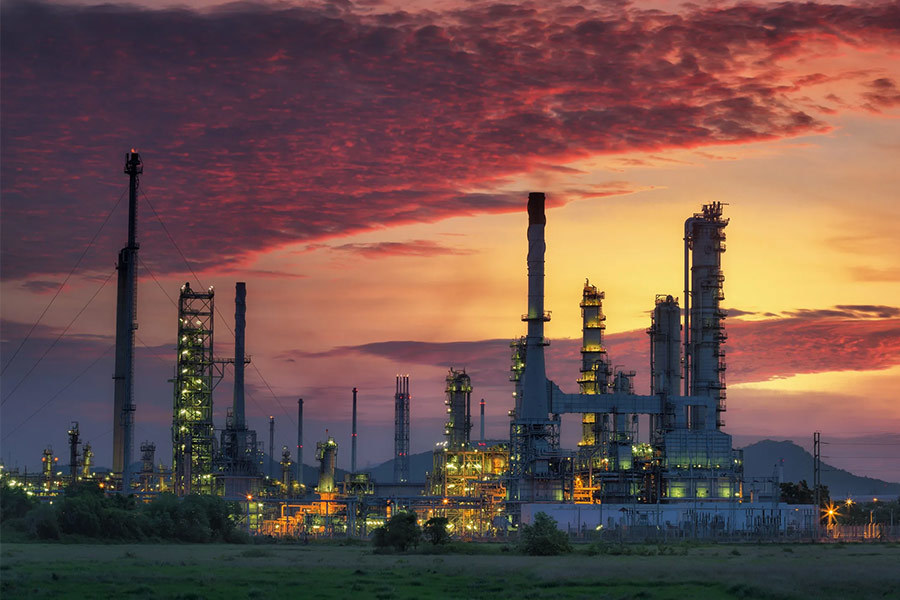
In the modern energy system, oil plays a pivotal role, and refining equipment is the main force behind the conversion of crude oil into various valuable oil products and chemical raw materials. Like sophisticated industrial giants, they play a vital role in the stage of oil refining.
First,Oil refining equipment lays the foundation for oil refining
Oil refining is a complex and fine process. After crude oil is extracted from the ground, it is like a piece of uncarved jade, which needs to be processed through layers of refining equipment to become a variety of refined oil and chemical products that meet different needs. The existence of refining equipment provides the basis for the realization of the entire refining process, from the initial separation of crude oil to the refining of the final product, each link is inseparable from the precise operation of specific refining equipment.
Second, the main oil refining equipment and its working principle
(A) atmospheric and vacuum distillation equipment
The atmospheric and vacuum distillation unit can be called the "first process" of oil refining, like a skilled "sorter". Its working principle is based on the differences in the boiling points of the components in the crude oil. In the atmospheric pressure tower, by heating the crude oil, the light components with lower boiling point, such as gasoline, kerosene, diesel, etc., are first vaporized and rise, and are separated and collected after condensation. The recombination component with a higher boiling point remains at the bottom of the tower and is then transported to the decompression tower. Due to the reduced pressure in the decompression tower, these high-boiling recombination components can also be vaporized and separated at relatively low temperatures, so as to obtain lubricants, paraffins and other products. The atmospheric and vacuum distillation unit initially separates crude oil into fractions with different boiling point ranges, which provides raw materials for subsequent deep processing.
(2) Catalytic cracking unit
If the atmospheric and vacuum distillation unit is a "sorter", then the catalytic cracking unit is a magical "magician". It uses the catalyst as the medium, under the joint action of high temperature and catalyst, the heavy distillate oil obtained by atmospheric and vacuum distillation, such as wax oil, residual oil, etc., is converted into light gasoline, diesel and liquefied gas and other products. In this process, the hydrocarbons of large molecules are cracked on the active center of the catalyst, decomposed into small molecules of hydrocarbons, and at the same time, isomerization, aromatization and other reactions will occur, thereby improving the quality of the product and octane number. Catalytic cracking unit greatly improves the light oil yield of crude oil and is the key equipment for producing gasoline and diesel oil in the refining process.
(3) Hydrofining unit
The hydrofining unit is like a "beautician", which is mainly used for refining oil products. In the presence of hydrogen and catalyst, it hydrogenates impurities such as sulfur, nitrogen, oxygen and unsaturated hydrocarbons such as olefins and aromatics. For example, sulfur-containing compounds react with hydrogen to produce hydrogen sulfide, which can be removed by subsequent desulfurization devices, thereby reducing the sulfur content of oil products and reducing environmental pollution during combustion. The quality of the hydrorefined oil has been significantly improved, and it is cleaner and more environmentally friendly, in line with increasingly stringent environmental standards and market demand.
Third, the collaborative operation and innovative development of refining equipment
The refining process is not a single equipment fighting alone, but a "chorus" of many refining equipment cooperating. From crude oil entering the atmospheric and vacuum distillation unit for preliminary separation, to the catalytic cracking unit for deep conversion of heavy distillates, and then to the hydrofining unit for oil purification, each equipment plays an indispensable role in its specific links, and together constitute an efficient and orderly oil refining production system.
With the continuous progress of science and technology, refining equipment is also continuing to innovate and develop. On the one hand, in order to improve the processing depth of crude oil and product quality, new catalysts and process technologies continue to emerge, prompting the performance of refining equipment to continue to optimize and upgrade. For example, some advanced catalytic cracking units use more efficient catalysts and reaction processes, further improving the yield and product quality of light oil. On the other hand, in order to meet the requirements of environmental protection, oil refining equipment has also made significant progress in energy conservation, emission reduction and pollutant emission reduction. Such as new hydrodesulfurization technology and equipment, can more effectively reduce the sulfur content of oil products, help the refining industry to achieve green and sustainable development.
In short, refining equipment, as the core driving force of the refining industry, not only supports the stability of global energy supply, but also promotes the continuous progress of refining technology. In the future, with the continuous growth of energy demand and the increasingly stringent environmental requirements, refining equipment will continue to forge ahead on the road of innovative development, and make greater contributions to ensuring energy security and promoting sustainable economic and social development.
Contact US
Henan Shangqiu Yellow River East Road, Jiguang Highway, the north exit of the new district, 5 kilometers east south of the road
Copyright © Shangqiu Ruilong environmental protection technology Co. ltd
Powered by :www.300.cn Supported IPV6 Privacy Agreement
